
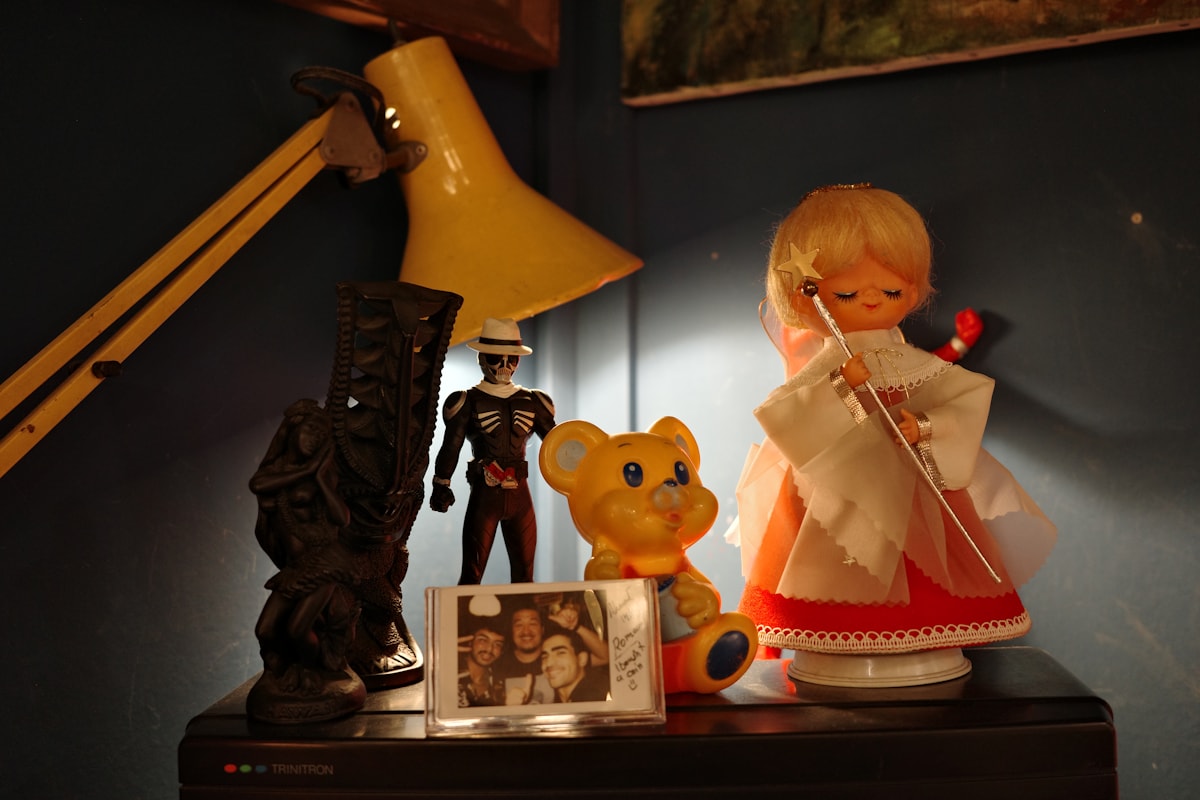
The U.S. collectible toy market has quietly crossed $6.8 billion, with mystery boxes and blind-box categories accounting for nearly one-third of specialty toy sales. Adults now represent the largest spending demographic—roughly one-quarter of all U.S. toy purchases. This is not a kids' market with adult spillover. It is an adult market that happens to use toys as the medium.

The Psychology of the blind box
Why do grown adults pay $15 for a sealed box when they could just buy the figure they want? Because the box is not the product—the anticipation is. Behavioral economists call it "variable ratio reinforcement," the same mechanism that makes slot machines addictive. Each box is a micro-lottery: small enough to feel harmless, exciting enough to repeat.
Add social media to the equation and the dopamine loop doubles. Unboxing videos on TikTok turn a private purchase into a public performance. The rare "secret" figure becomes social currency—proof of luck, taste, or dedication.

Who Is Actually Buying
Gen Z (18–26): Treats collecting as identity expression. They do not just buy toys; they curate a shelf that communicates aesthetic taste to Instagram followers.
Millennials (27–42): Nostalgia meets disposable income. Many grew up with Pokémon and Beanie Babies; blind boxes feel like a sophisticated evolution of that childhood ritual.
Gen X collectors (43+): The smallest but highest-spending segment. They buy fewer pieces but gravitate toward limited editions and artist collaborations.
The Retail Playbook
Pop-up shops, vending machines in malls, subscription boxes, and TikTok Shop drops. The industry has learned that scarcity + convenience + community is the formula.

For curated designer plush without the algorithm noise, visit our shop.
Sources: Toy Association 2026 Trends, PopBoxss Market Guide. Editorial analysis.